How Cflow Workflow Automation Software: Powerful Features
Every business runs on tasks that repeat daily, and most of them eat up more time than they should. A manager waits three days for a single signature. An HR team chases the same onboarding form for every new hire. These delays aren’t just annoying they cost money and slow growth.
How Cflow workflow automation software works is simple: it takes these repetitive, manual steps and turns them into structured, automated paths that move on their own.
This article breaks down exactly what Cflow does, how it automates day-to-day operations, and which business operations benefit most from it. You’ll see the core features, real use cases across departments, and a clear answer to whether this no-code platform fits your company.
By the end, you’ll know exactly how automated business processes can replace the manual grind your team deals with today.
How Cflow Workflow Automation Software?
Cflow software is a no-code workflow automation platform that lets teams build, run, and track business processes without writing a single line of code. It replaces email chains and spreadsheet trackers with structured digital paths that move tasks forward automatically.
Read More About: What Does AWD Mean on a Car? 26 Easy Facts Explained
At its core, the Cflow platform works through a workflow builder that maps out each step a task must follow who approves it, what happens next, and when someone gets notified. This turns scattered manual processes into a single, visible system. Instead of hunting for status updates, everyone sees exactly where a task stands inside one workflow management system.
How Cflow Automates Business Processes
Automation here doesn’t mean replacing people. It means removing the manual steps that slow people down. Cflow does this by routing tasks automatically, alerting the right person at the right time, and keeping every step logged for reference.
This happens through two main mechanisms: automating the repetitive parts of a job and streamlining the approval chains that usually bottleneck progress.
Automating Repetitive Tasks
Repetitive tasks like data entry, status updates, and recurring reports drain hours every week. A finance team processing 200 invoices a month, for example, can spend over 15 hours just re-entering data across systems. Cflow’s task automation removes that manual re-entry by triggering the next step automatically once a form is submitted, cutting hours of repetitive tasks down to minutes.
Streamlining Approvals and Workflows
Approval delays happen when a request sits in someone’s inbox for days. Cflow’s approval workflows fix this by routing requests automatically to the correct approver, sending reminders if no action happens within a set time. A purchase order that once took five days to clear three approval levels can move through in under 24 hours once workflow approvals run on autopilot instead of manual follow-up.
Key Features of Cflow Workflow Automation
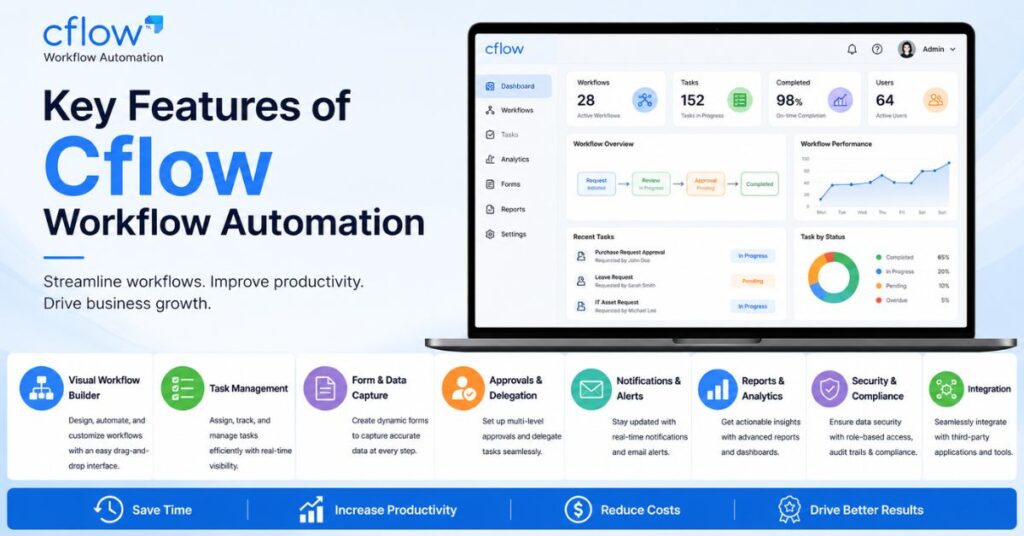
Cflow’s feature set focuses on three things: building workflows fast, capturing information cleanly, and giving visibility into every step. Here’s a quick breakdown of what the platform includes.
| Feature | What It Does |
| No-code platform | Lets non-technical staff build and edit workflows through drag-and-drop tools |
| Forms automation | Captures data through customizable digital forms tied directly to workflows |
| Workflow tracking | Shows real-time status of every task moving through the system |
| Workflow reporting | Generates performance data on turnaround time and bottlenecks |
| Workflow integration | Connects with existing business tools for smoother data management |
No-Code Workflow Builder
The Cflow workflow builder uses a visual, drag-and-drop interface, so building a new process takes hours instead of weeks of developer time. Teams can use ready-made workflow templates for common processes like leave requests or purchase approvals, then adjust them through workflow customization to match their exact steps.
Read More About: 86 Meaning Slang: Powerful Meaning Explained
Forms, Notifications, and Approvals
Cflow forms collect the exact information a workflow needs before it moves forward, cutting down on missing details and follow-up emails. Once submitted, notifications alert the next person in line, and automated approvals move the request along without anyone needing to check in manually.
Workflow Tracking and Reporting
Real-time tracking shows exactly where every task sits at any given moment, giving managers full process visibility instead of guesswork. Cflow reporting then turns that tracked data into performance insights, highlighting which steps take too long and where process optimization can save the most time.
How Cflow Improves Business Efficiency
Efficiency gains show up the moment manual steps disappear from a process. Teams stop chasing approvals, stop re-entering data, and stop losing track of where a task stands. That shift alone often cuts process time by half or more.
The table below shows a simple before-and-after comparison based on common business process automation results.
| Process Step | Manual Process | Cflow Automated Process |
| Purchase order approval | 4–5 business days | Under 24 hours |
| Employee onboarding paperwork | 2–3 days of back-and-forth | Same-day completion |
| Invoice processing | 15+ hours monthly | Under 3 hours monthly |
| Status tracking | Manual email check-ins | Real-time dashboard view |
This kind of operational efficiency doesn’t just save time. It frees employees to spend their energy on higher-value work instead of chasing paperwork, which directly improves productivity across departments.
Business Processes You Can Automate With Cflow
Nearly every department deals with repetitive, approval-based work, which makes How Cflow Workflow Automation Software relevant across more than one team. By automating routine tasks, approvals, and business processes, Cflow helps organizations improve efficiency and workflow management. Below are three key areas where Cflow workflow automation delivers the clearest impact.
Employee and HR Workflows
Employee workflows like onboarding, leave requests, and performance reviews often involve multiple people signing off in sequence. Cflow automates each step, so a new hire’s paperwork moves from HR to IT to their manager without anyone manually forwarding emails.
Finance and Procurement Processes
Finance teams handle constant approval chains for purchase orders, reimbursements, and vendor payments. Process workflow automation here means requests route automatically based on amount or department, cutting the back-and-forth that usually delays payment cycles.
Sales and Customer Operations
Sales teams often lose deals waiting on internal quote approvals or contract sign-offs. Automating these document workflows means a sales rep gets contract approval in hours, not days, which keeps deals moving instead of stalling in someone’s inbox.
Benefits of Using Cflow for Workflow Automation
The real value of Cflow benefits shows up in day-to-day operations, not just in theory. Faster approvals, fewer errors, and clearer accountability all stack up into measurable gains over time.
Read More About: OTP Meaning Slang: 5 Essential Facts You Should Know
| Benefit | Business Impact |
| Reduced turnaround time | Tasks move in hours instead of days |
| Fewer manual errors | Automated data entry cuts mistakes significantly |
| Better accountability | Every step is logged and traceable |
| Easier scaling | Adding new workflows doesn’t add extra staff workload |
| Improved reporting | Managers get clear data instead of guesswork |
These Cflow use cases show why so many teams move away from spreadsheets and email chains once they see how much time automation returns to their week.
Is Cflow Right for Your Business?
Cflow fits best for companies dealing with repeated approval chains, multi-step processes, or teams still relying on manual forms and email tracking. If your business processes ten or more approval requests a week across departments, the time saved usually justifies the switch quickly.
That said, very small teams with just one or two simple processes might not need a full workflow automation platform yet. The real signal to watch for is frustration if people keep asking “where’s my request?” or “who approved this?”, that’s usually the moment enterprise workflow automation starts paying for itself.
FAQ’s
How does workflow automation work?
Workflow automation uses software to automate repetitive tasks and processes based on predefined rules. It routes tasks, approvals, notifications, and data automatically, reducing manual work and errors.
What’s the best workflow automation software?
The best workflow automation software depends on your business needs, integrations, and budget. Cflow is a strong option for businesses looking for no-code workflow automation and customizable process management.
What is Cflow in NPCI?
Cflow is a workflow automation platform used to streamline and manage business processes. It can help organizations automate approvals, tasks, forms, and other repetitive workflows.
How do you automate a workflow?
To automate a workflow, identify repetitive steps, define the process and rules, and configure them in a workflow automation tool. Then add triggers, actions, approvals, and notifications to run the process automatically.
Conclusion
How Cflow workflow automation software works comes down to one simple idea: remove the manual steps that slow people down and replace them with clear, automated paths. From HR onboarding to finance approvals to sales contracts, this process automation software turns scattered, error-prone tasks into consistent, trackable workflows.
Businesses that want to streamline business processes don’t need to overhaul their entire operation overnight.
Starting with one high-friction process, then expanding from there, is usually enough to feel the difference. Once you automate business processes with Cflow, the time your team gets back speaks for itself and that’s really the whole point of business process management done right.