What Does Active Contingent Mean? Essential Guide
You’re scrolling through listings and you spot a house that looks perfect. Then you see the status: active contingent. What does that actually mean, and should you even bother reaching out?
This guide answers what does active contingent mean in plain English. You’ll learn how it works in a real estate transaction, why it matters for both buyers and sellers, and what usually happens next.
What Does Active Contingent Mean in Real Estate?
Active contingent describes a property where the seller accepts an offer, but the sale still depends on specific conditions. The purchase agreement exists, yet it isn’t finalized.
This contingent status in real estate tells other buyers the home isn’t fully off the market. The listing remains active because the deal could still fall apart if the buyer can’t meet the agreed terms.
Read More About: What Does Adam Mean? 13 Powerful Facts About the Name
How an Active Contingent Offer Works
An active contingent offer starts the moment the seller signs off on a buyer’s offer. From there, a contingency period begins, and the clock starts ticking on specific deadlines.
During this stretch, the buyer works through contract conditions like inspections and loan approval. What Does Active Contingent Mean If everything checks out, the deal moves toward the closing process. If not, the sale falls through and the home returns to full active status.
What the Contingency Usually Covers
Most contingencies fall into a few standard categories tied to money, condition, and paperwork. What Does Active Contingent Mean A typical active contingent listing includes financing terms, an inspection window, and sometimes a home sale contingency if the buyer needs to sell their current place first.
Each condition protects one side of the deal. Buyers get an exit if problems surface, and sellers get a serious, documented offer instead of a casual inquiry.
Active Contingent vs Pending: What’s the Difference?
These two statuses confuse a lot of people, but they mark different stages of the same journey. Active contingent vs pending really comes down to how much work remains before closing.
| Status | What It Means | Backup Offers? |
| Active Contingent | Offer accepted, but contingencies remain | Usually yes |
| Pending | Conditions cleared, pending sale moving toward closing | Rarely |
An active contingent home still has open conditions. A pending sale means those boxes are checked, and the deal is close to done.
Can You Still Make an Offer on an Active Contingent Home?
Yes, in most cases you can submit a backup offer on an active contingent property. The listing agent typically keeps the door open in case the primary deal collapses.
Your offer won’t jump ahead of the accepted one, though. It simply waits in line, ready to activate if the current buyer can’t meet their contract conditions.
Common Types of Real Estate Contingencies
Real estate contingencies exist to protect both sides during a transaction that hasn’t fully closed. What Does Active Contingent Mean Three types show up in almost every deal, each covering a different risk.
Understanding these three helps you read any contingent property listing with more confidence. They also explain why some active contingent house deals take weeks longer than others.
Read More About: TMI Meaning Slang: 12 Easy Examples & Uses
Home Inspection Contingency
The inspection contingency gives the buyer a set window, often 7 to 10 days, to have the property professionally checked. What Does Active Contingent Mean If the home inspection turns up major issues like a failing roof or electrical hazards, the buyer can renegotiate or walk away.
This clause protects buyers from inheriting expensive surprises after closing.
Financing Contingency
A financing contingency ties the sale to the buyer actually securing a loan. If mortgage approval or financing approval doesn’t come through, the buyer can cancel without losing their earnest money.
Lenders usually need 30 to 45 days to finish underwriting, which is why this contingency often drives the overall timeline.
Home Sale Contingency
A home sale contingency applies when the buyer needs to sell their current house before completing the new purchase. This clause is common in tighter markets where buyers can’t afford two mortgages at once.
Sellers sometimes hesitate to accept these terms since they add uncertainty and extra time to the deal.
Why Does Active Contingent Matter to Buyers and Sellers?
For a prospective buyer, this status signals opportunity mixed with limited access. The home might still be reachable through a backup offer, but priority always goes to the buyer already under contract.
For sellers, an active contingent listing means keeping options open without fully closing the door on other interest. Smart sellers stay in touch with their real estate agent and track every deadline closely, since a stalled contingency clause can eat weeks of the housing market window.
How to Find and Identify Active Contingent Properties
Most listing platforms flag this status clearly under the MLS status field, right next to the address and price. You’ll typically see wording like “Contingent” or “Active Contingent” alongside notes about which conditions remain open.
Read More About: Mean Corpuscular Hemoglobin High: 11 Key Causes & Signs
Checking the MLS listing details usually reveals the type of contingency and an estimated timeline. Calling the listing agent directly is still the fastest way to confirm flexibility and current progress.
Risks and Considerations of Active Contingent Deals
Every active contingent deal carries some risk, and that risk lands differently depending on which side of the table you’re on. Knowing what could go wrong helps you plan instead of panic.
Timing problems cause most of the friction. Inspections get delayed, lenders ask for more paperwork, and due diligence drags on longer than anyone expected.
Risks for Buyers
Buyers risk losing time and momentum if their financing stalls or the property appraisal comes in low. A low appraisal can force a buyer to renegotiate price or bring extra cash to closing.
There’s also emotional risk. Getting attached to a home during the contingency period makes it harder to walk away if red flags appear.
Risks for Sellers
Sellers risk losing other genuine buyers while waiting on one deal to clear. If the primary offer collapses, the home has to relist and restart its housing market exposure from a weaker position.
Some buyers assume a contingent property already sold and skip it entirely, which shrinks the seller’s pool of multiple offers during the wait.
What Happens After an Active Contingent Listing?
Two outcomes follow every active contingent home. Either the buyer satisfies every condition and the deal shifts to pending sale, or something breaks down and the sale falls through.
When contingencies clear, the transaction heads straight into the closing process, often within two to four weeks. When the deal fails, the listing reverts to fully active, and any backup offers waiting in line get a chance to move forward.
Common Misconceptions About Active Contingent
A lot of buyers assume active contingent means the sale is basically finished, but that’s not accurate. Contingencies still need to clear before anything is final, and plenty of deals fall apart at this stage.
Another myth claims the home can’t be shown anymore. In reality, agents often still show an active contingent property to interested buyers who want to line up a backup offer in case the current deal doesn’t close.
Active Contingent Examples Explained
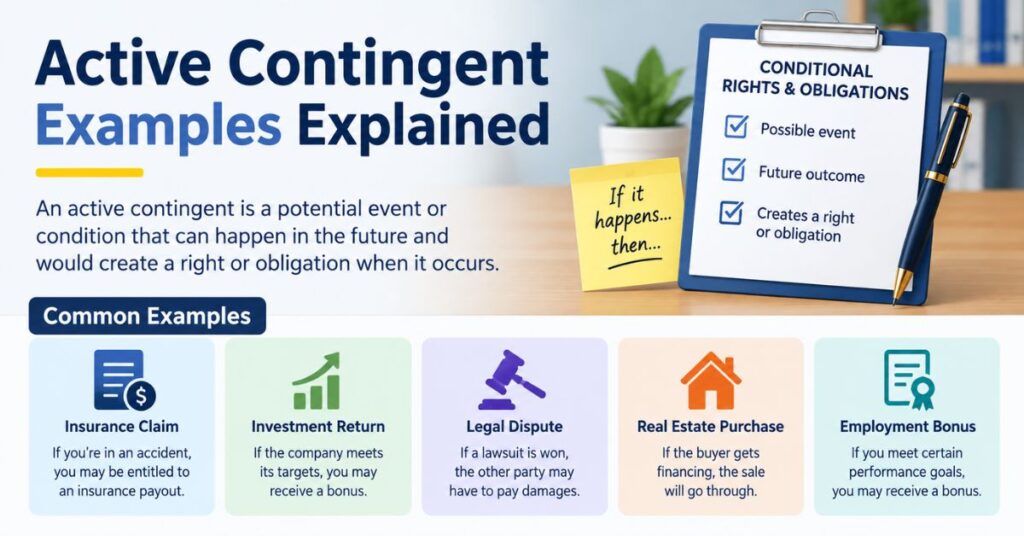
Picture a buyer whose offer gets accepted on a three-bedroom home, but they still need mortgage approval from their lender. That property sits as active contingent until the bank finishes underwriting, usually within a month.
Now picture a different case: a company signs a supply contract that depends on funding clearance from its board. The agreement stays active until that funding gets confirmed, mirroring the same logic used in home sales.
A third scenario involves a construction crew starting site prep while waiting on a permit. Work continues, but the whole project remains conditional, active contingent in every practical sense, until the permit clears.
Frequently Asked Questions
What does active contingent mean on Zillow?
It means the seller accepted an offer, but conditions like inspection or financing still need to be cleared before the sale finalizes.
What does active contingent mean on a house specifically?
The house has an accepted offer on file, yet the purchase contract depends on the buyer meeting agreed terms first.
What’s the difference between contingent and contingency?
Contingent describes a property or offer that depends on certain conditions, while a contingency is the specific condition that must be met.
What is the difference between active and pending?
An active listing is available for offers, while a pending listing typically has an accepted offer and is further along toward closing.
What month is the hardest to sell a house?
January is often one of the harder months to sell a house because buyer activity is typically lower during the winter.
Is contingent the same as active under contract?
They’re similar, but not always identical; both indicate an accepted offer, while “active under contract” generally means the seller may still consider backup offers.
Conclusion
So, what does active contingent mean at the end of the day? It’s a status that shows real progress on a home sale while leaving room for things to change. Contingencies remain until inspections, financing, and other conditions clear, and that gap is exactly what keeps the deal from being final.
Whether you’re a buyer watching a prospective property or a seller managing an accepted deal, tracking deadlines closely makes all the difference. Buyer and seller communication, paired with a sharp real estate agent, turns a contingent status from a confusing label into a manageable, predictable process.