Sadistic Meaning Signs, Psychology & Real-Life Examples
Some people don’t just hurt others by accident. They do it on purpose and they enjoy watching it happen. Understanding the sadistic meaning behind this kind of behavior helps you spot it before it damages your life. This isn’t about casual meanness. It’s about a pattern rooted in real behavioral psychology.
This article breaks down the sadistic definition, explains why some people develop these dark personality traits, and shows you how to recognize a sadistic personality in daily life. You’ll also learn the difference between sadistic and psychopathic behavior, plus practical steps for protecting your mental health around someone who shows these patterns.
What Does Sadism Mean?
Definition and Simple Explanation
A sadistic person feels genuine pleasure from suffering they cause in others. This goes beyond simple rudeness. It involves enjoyment of suffering as the actual reward, not a side effect of conflict. Someone acting out of anger might feel guilty later. Someone with sadistic tendencies typically doesn’t.
The word sadistic describes both a personality trait and a pattern of intentional harm. A person can show sadistic behavior occasionally under stress. Others display it as a consistent part of who they are. That distinction matters when you’re trying to figure out if you’re dealing with a bad day or a deeper issue.
Read More: The Complete Guide to Ratio Slang: 30 Must-Know Terms
Origin and Word History
The term traces back to Donatien Alphonse François, better known as the Marquis de Sade, an 18th-century French writer whose stories centered on cruelty and control. His name eventually became shorthand for pleasure from others’ pain.
However, it was psychiatrist Richard von Krafft-Ebing who actually coined “sadism” as a clinical term in his 1886 work on sexual behavior. He used it to classify a specific pattern within forensic psychology, not just literary shock value. That clinical root is why psychological sadism carries weight in clinical psychology today, not just in casual conversation.
Understanding Sadism in Psychology
Why Some People Enjoy Others’ Suffering
Researchers in aggression research have found that inflicting or witnessing pain can activate reward circuits in certain brains. A 2013 study published in behavioral science journals showed that people high in sadistic traits reported genuine enjoyment while causing harm to insects or other people in lab settings, even when it cost them personal effort.
This creates a feedback loop. The brain treats humiliation or intimidation as a reward, similar to how it treats food or social approval. Over time, this reinforces antisocial behavior and makes it harder to break without outside intervention.
Is Sadism a Mental Disorder?
Sadistic Personality Disorder actually appeared in an appendix of the DSM-III-R back in 1987, though the American Psychiatric Association removed it from later editions. Today, Sexual Sadism Disorder remains a recognized diagnosis when the pattern causes real distress or harm.
That said, most people who show sadistic tendencies never receive a formal diagnosis. Personality psychology treats sadism more often as a trait that exists on a spectrum rather than a strict category. Some people land high on the scale. Most fall somewhere in the middle.
Common Signs of a Sadistic Personality
Emotional and Behavioral Traits
A person with strong sadistic traits often shows a clear lack of empathy paired with a hunger for dominance. They may use manipulation tactics to control conversations or relationships, then act surprised when confronted about the damage.
Watch for repeated verbal abuse disguised as jokes or “just being honest.” That pattern, combined with little to no guilt afterward, points toward something deeper than a bad temper.
Read More: Don’t Be Salty Meaning What It Really Means
| Sign | What It Looks Like in Real Life |
| Enjoyment of pain | Smiling or laughing while someone else struggles |
| Manipulative behavior | Twisting facts to make you doubt yourself |
| Lack of empathy | No apology after clearly causing harm |
| Need for control | Micromanaging or isolating you from support |
| Repeated cruelty | Same pattern across weeks or months, not a one-time slip |
Recognizing Subtle Sadistic Tendencies
Not every sadistic person acts obviously cruel. Some rely on passive aggression instead, like giving backhanded compliments or “forgetting” to include someone on purpose. This subtle version of toxic behavior often hides behind humor.
For example, a coworker who constantly “jokes” about your mistakes in front of others, then calls you sensitive when you object, may be showing quiet emotional cruelty rather than genuine friendliness.
Types of Sadistic Behavior
Everyday (Non-Clinical) Sadism
Everyday sadism shows up in socially tolerated ways, like enjoying a rival’s failure or laughing at someone’s public embarrassment online. Researchers now link this to online trolling, where people target strangers purely for the entertainment value of their emotional distress.
This form rarely crosses into criminal territory. Still, it reflects the same underlying reward system found in more extreme sadistic behavior, just expressed at a lower intensity.
Clinical and Personality-Related Sadism
More severe cases connect to what researchers call the Dark Tetrad, an expansion of the classic Dark Triad of narcissism, Machiavellianism, and psychopathy. Adding sadism as a fourth trait helps explain why some people cause harm even when there’s nothing to gain from it.
People scoring high across all four traits tend to show more exploitative behavior in relationships and workplaces. This combination often predicts long-term patterns of abusive behavior rather than isolated incidents.
Examples of Sadistic Behavior in Daily Life
At Work and School
A manager who publicly mocks an employee’s mistake in a meeting, then repeats the joke for weeks afterward, is showing classic workplace bullying rooted in sadistic behavior. The goal isn’t correction. It’s humiliation for its own sake.
In schools, a student who deliberately targets a classmate’s insecurities, then films the reaction for laughs, reflects the same pattern of school bullying built on genuine enjoyment of suffering rather than typical peer conflict.
Read More: Mean Soundboard Complete Guide to Funny Sounds, Features & Uses
In Friendships and Romantic Relationships
Sadistic behavior in relationships often looks like an abusive partner who criticizes your appearance in front of friends, then denies doing anything wrong when you bring it up later. This creates a cycle of psychological abuse disguised as honesty or teasing.
Friends can show this too. Someone who spreads embarrassing stories about you, then watches your reaction with visible amusement, is prioritizing their own dominance over the friendship itself.
Sadistic vs. Psychopathic What’s the Difference?
Key Similarities
Both traits share a lack of empathy and a tendency toward hostile behavior without much guilt. People high in either trait often struggle with genuine emotional regulation and show little concern for how their actions affect others.
| Trait | Sadistic | Psychopathic |
| Motivation | Enjoys causing pain | Lacks moral compass, may not enjoy it |
| Empathy | Largely absent during the act | Chronically low overall |
| Emotional response | Active pleasure | Often flat or detached |
| Common trigger | Opportunity to dominate | Personal gain or impulse |
Important Differences
A psychopathic person may harm someone purely for personal gain without feeling anything either way. A sadistic person, on the other hand, actively seeks out situations that let them cause pain because the act itself feels rewarding.
Not everyone with psychopathy shows sadistic traits, and not every sadistic person meets criteria for sociopathy or antisocial behavior disorders. The two traits overlap often, but they’re not identical.
How to Deal With a Sadistic Person
Setting Healthy Boundaries
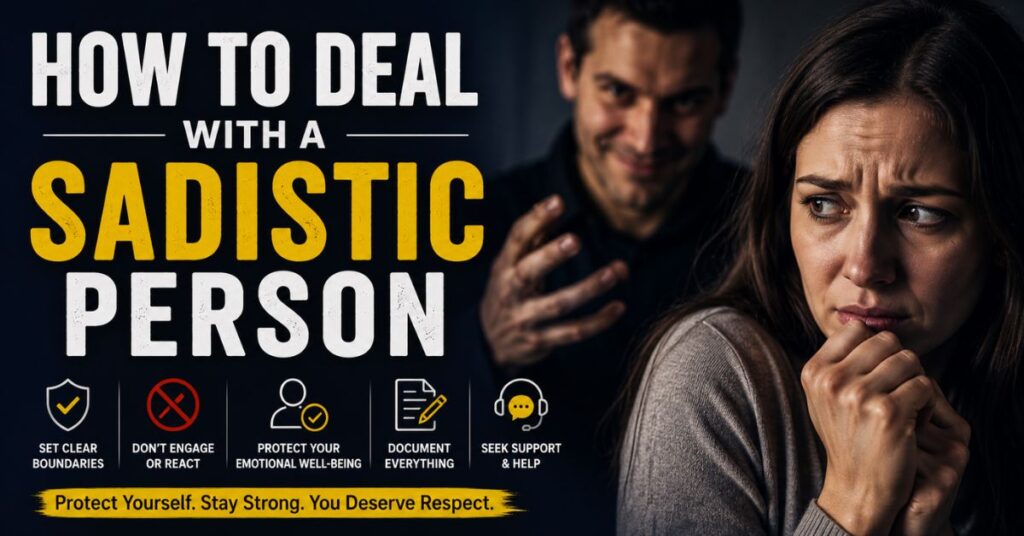
Start by limiting how much personal information you share with someone who shows sadistic tendencies. Reducing what they know about your emotional distress removes material they can later use against you.
Clear relationship boundaries work better than confrontation in most cases. Stating consequences calmly, then following through, protects your emotional wellbeing far more than trying to reason someone out of enjoying dominance over you.
When to Seek Professional Help
If a relationship with a sadistic person starts affecting your sleep, work, or sense of safety, talking to a licensed therapist becomes essential. Cognitive behavioral therapy helps many people process the trauma left behind by long-term emotional manipulation.
Professional support also helps you build coping strategies and resilience for the future. A counselor can guide you through practical steps, whether that means setting firmer limits or planning a full exit from a toxic relationship.
FAQ’s
Is being sadistic the same as being mean? Not quite. Meanness often comes from frustration or a bad moment, while sadistic behavior involves genuine pleasure from someone else’s pain as the actual goal.
Can sadistic people change? Some can, especially with consistent therapy and real self-awareness, though deeply rooted personality traits tend to shift slowly rather than overnight.
Is sadism always dangerous? Not always. Mild forms, like enjoying a rival’s failure, rarely lead to real harm, while more intense sadistic tendencies can escalate into serious abusive behavior over time.
How do I know if I’m dealing with a sadistic person? Look for repeated patterns of humiliation, little to no remorse afterward, and clear enjoyment during moments that clearly cause you pain.
Is sadism recognized as a clinical diagnosis? Yes, in specific forms. Sexual Sadism Disorder remains part of current diagnostic manuals, even though the broader personality disorder version was dropped from mainstream classification decades ago.
Conclusion
Understanding the sadistic meaning behind someone’s actions gives you real power in protecting your own mental health. Whether you’re dealing with a coworker, a friend, or a partner, recognizing sadistic behavior early lets you set boundaries before real damage takes hold.
The patterns aren’t always obvious, and they don’t always look like the extreme examples in movies. Sometimes they show up as a joke that goes too far, repeated once too often. Trust that pattern. It usually tells you everything you need to know.